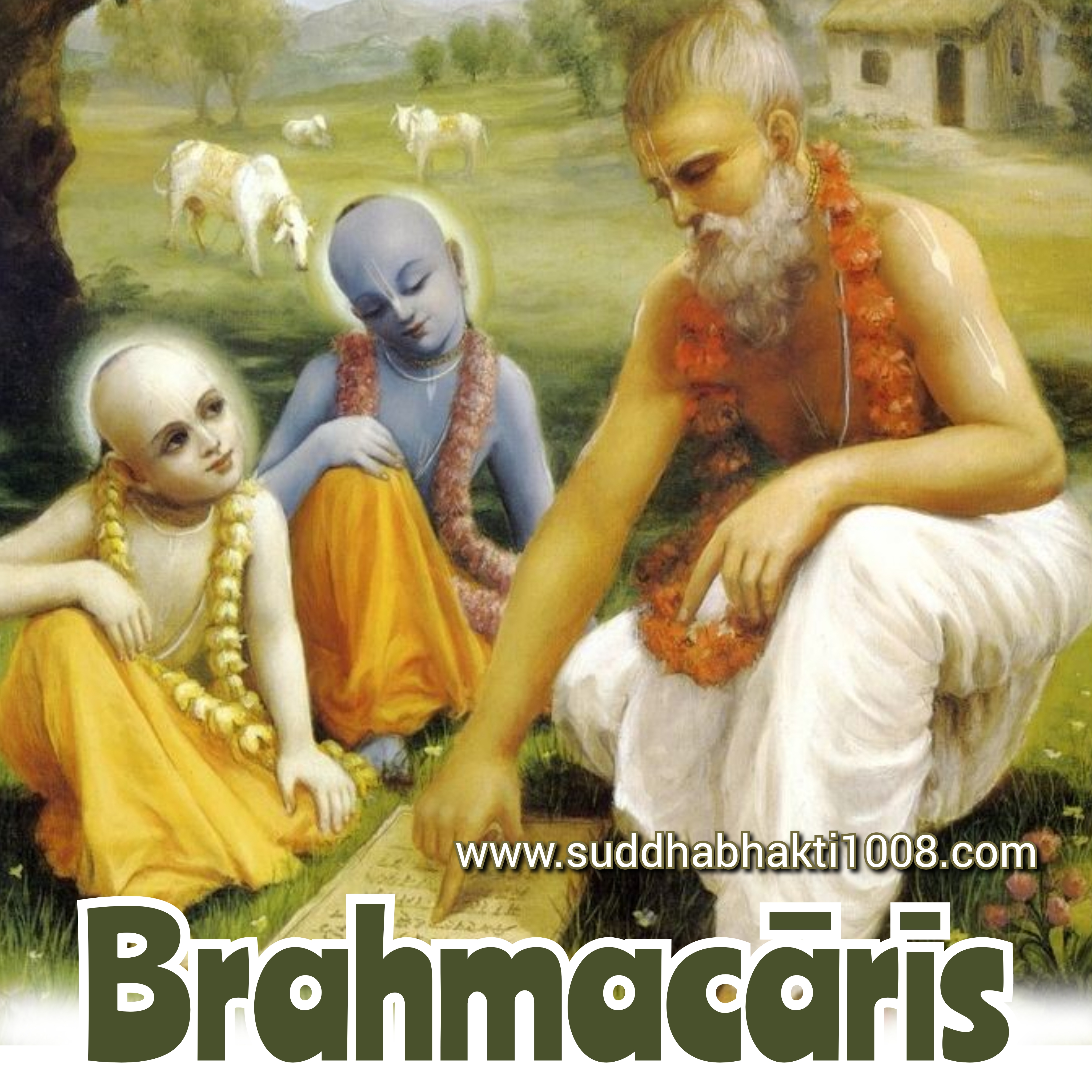
Brahmacārīs


The principle of brahmacarya is celibacy. There are two kinds of brahmacārīs. One is called naiṣṭhika-brahmacārī, which means one who takes a vow of celibacy for his whole life, whereas the other, the upakurvāṇa-brahmacārī, is a brahmacārī who takes the vow of celibacy up to a certain age. For example, he may take the vow to remain celibate up to twenty-five years of age; then, with the permission of his spiritual master, he enters married life. Brahmacarya is student life, the beginning of life in the spiritual orders, and the principle of brahmacarya is celibacy. Only a householder can indulge in sense gratification or sex life, not a brahmacārī. 


Srimad Bhagavatam 3.22.14 / Purport


🔆🔆🔆🔆🔆🔆🔆 🔆🔆🔆🔆🔆🔆🔆 🔆🔆🔆🔆🔆🔆🔆


Hare Krishna Hare Krishna Krishna Krishna Hare Hare

Hare Rama Hare Rama Rama Rama Hare Hare


🔆🔆🔆🔆🔆🔆🔆 🔆🔆🔆🔆🔆🔆🔆 🔆🔆🔆🔆🔆🔆🔆


Hare Krishna 🙏


For Authorized Spiritual Articles,Posters , Quote etc . .  kindly download Telegram application in Google play store and Follow the below link  for telegram Suddha Bhakti channel 👇


https://t.me/suddhabhakti

Comments

Popular posts from this blog

Kartik Mahatmya

  The Mouse, the Lamp and the Queen A Puranic History Srila Jiva Goswami writes in Bhakti-sandarbha , anuccheda 153: astu tāvat śuddha-bhakty-ābhāsasya vārtā, aparādhatvena dṛśyamāno 'py asau mahā-prabhāvo dṛśyate. It is seen that the activities of pure bhakti when performed even without a devotional attitude are still very powerful. Srila Jiva Goswami then cites an example from the Viṣṇudharmottara Purāṇa of an ordinary mouse who became a devotee and a queen due to some superficial contact with the Lord. A similar story is also found in the Padma Purāṇa . In the Viṣṇudharmottara (1. 167), Markandeya Rishi relates the following to King Vajra. In the country of Vidarbha there lived a king named Chitraratha. He had one hundred and fifteen sons, but only one daughter, whose name was Lalitika. She was endowed with all good qualities and possessed matchless beauty. Her father gave her in marriage to the righteous king of Kashi. That law-abiding king of Kashi had three hundred wi...

Yogini Ekadasi

  Yudhisthira Maharaj said, "Oh Supreme Lord, I have heard the glories of the Nirjala Ekadasi, which occurs during the light fortnight of the month of Jyeshtha (May - June).  Now I wish to hear from You about the suddha Ekadasi that occurs during the dark fortnight of the month of Ashadha (June - July).  Kindly describe to me all about it in detail, Oh killer of the Madhu demon (Madhusudana)." The Supreme Lord, Sri Krishna, then replied, "Oh king, I shall indeed tell you about the best of all fasting days, the Ekadasi that comes during the dark part of the month of Ashadha. Famous as Yogini Ekadasi, it removes all kinds of sinful reactions and awards supreme liberation. "Oh best of kings, this Ekadasi delivers people who are drowning in the vast ocean of material existence and transports them to the shore of the spiritual world. In all the three worlds, it is the chief of all sacred fasting days. I shall now reveal this truth to you by narrating a history recounted ...

“From Hell to Vaikuntha – The glory of "Rama Nama"

Janaka Maharaja's Visit to Hell Janaka Maharaja is the father of Sita and a great devotee of Lord Ramachandra. It is described in Śrīmad Bhagavatam (6.3.20) that he is one of the twelve great authorities on religious principles in this universe. The following story from Padma Purāņa (pātālakhanda 18.31-77) of how Janaka Maharaja once visited hell illustrates the supreme potency of the holy name and the association with saintly persons. Lord Ananta Sesa once narrated a wonderful account of how King Janaka visited the abode of Yamaraja. After a long life, Janaka Maharaja gave up his body through the process of yoga. A divine airplane decorated with many bells descended and Janaka Maharaja boarded it. On the way the air-plane came near to the abode of Yamaraja, the lord of death. There, sinners were suffering pun-ishment in millions of hells. When the wind that had touched the body of Janaka came to them they felt great joy and their misery disappeared. Then those persons, oppressed b...